
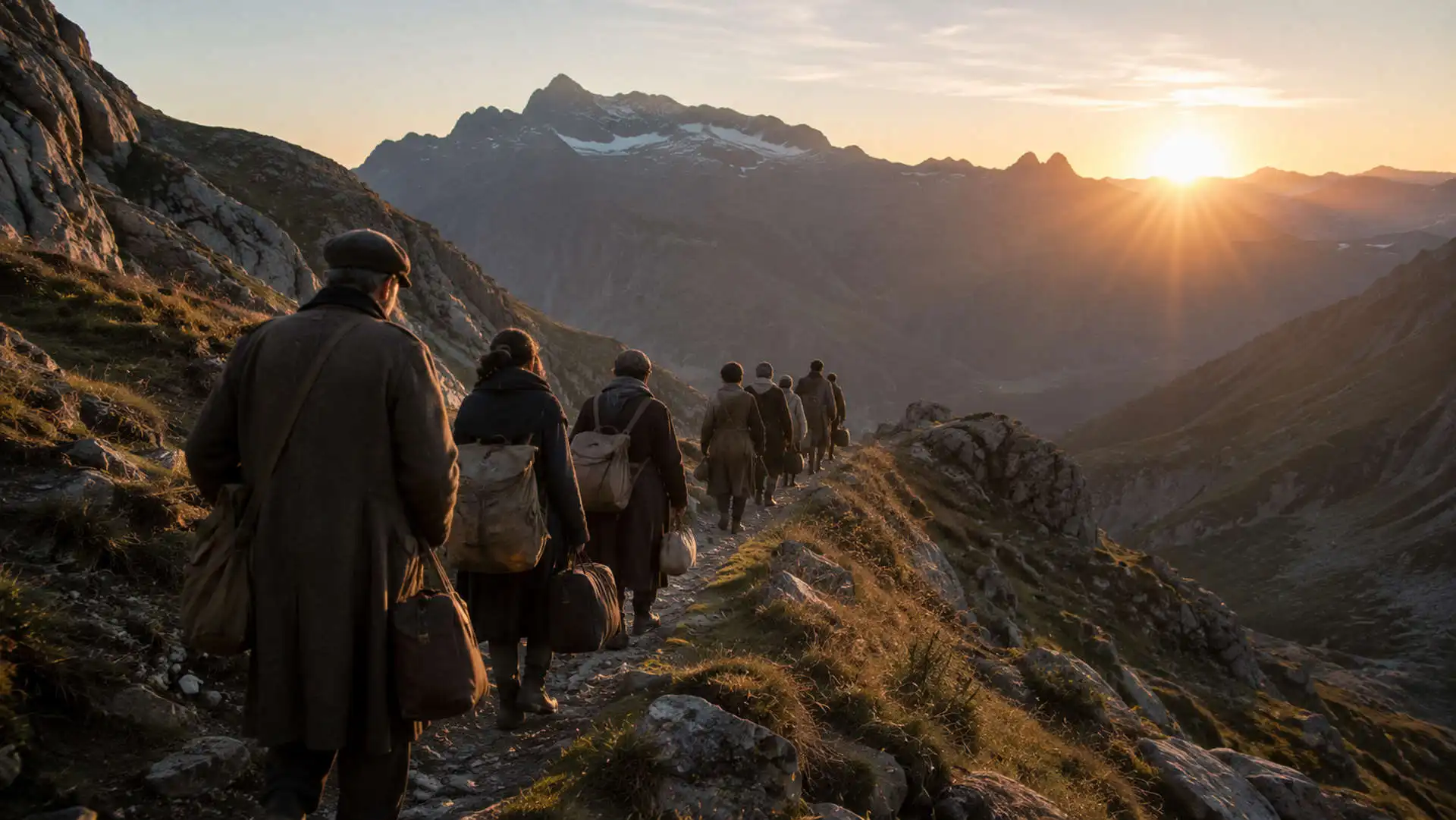
WWII Escape Routes in the Pyrenees
Research-based stories of refugees, resistance networks, border crossings, and the hidden routes from Nazi-occupied Europe toward Spain and Andorra.
The Pyrenees were far more than a mountain barrier during World War II.
Between 1940 and 1944, refugees, Allied airmen, resistance members, and fugitives crossed these mountains in search of safety. Some followed organized escape networks. Others relied on local guides, resistance contacts, or sheer determination.
Today, the escape routes remain one of the most significant chapters of wartime history in the Pyrenees.
This guide brings together the key articles from this website, helping readers understand the geography, people, routes, and historical context behind the escape networks that operated between France, Spain, and Andorra.
Understanding the Escape Routes
Before exploring individual stories or specific trails, it helps to understand how the escape networks operated and why the Pyrenees became such an important frontier during the war.
These articles provide an overview of the routes, geography, and practical realities of wartime crossings.
Refugees, Resistance, and Hidden Networks
The escape routes depended on people.
Local guides, resistance networks, safe-house operators, and ordinary civilians played critical roles in helping fugitives move across one of Europe’s most difficult mountain regions.
These articles focus on the human stories behind the crossings.
Famous Routes and Historical Lines
Not all escape routes followed the same path.
Some became highly organized international networks, while others were local crossing routes known only to guides and fugitives.
These articles examine some of the most important routes associated with wartime escapes through the Pyrenees.
Visiting the Routes Today
Many visitors are interested in the history of the escape routes but do not intend to undertake a demanding multi-day trek.
The following articles explain how these landscapes, stories, and historical locations can be explored today through a broader understanding of the region.
Understanding the Central Pyrenees
Many of the stories featured on this website focus on the central Pyrenees, particularly the regions around Andorra, Alt Urgell, Pallars Sobirà, Ariège, and neighboring frontier areas.
These regions contain some of the most important landscapes connected to wartime crossings, resistance activity, refugee movements, and border history.
The goal is not simply to follow a trail, but to understand how geography, politics, and human decisions shaped the escape networks that operated here.
Research-Based Storytelling and Historical Context
The history of the escape routes is often reduced to a single trail or a single dramatic crossing.
In reality, the story is much broader.
It involves geography, international borders, refugee movements, resistance organizations, local communities, and individual acts of courage.
The articles in this guide aim to provide historical context rather than isolated anecdotes, helping readers understand how the wider escape system functioned across the Pyrenees.
Exploring Further
The WWII escape routes remain one of the most compelling historical stories of the Pyrenees.
Whether your interest lies in refugee history, resistance networks, famous routes such as the Chemin de la Liberté, or the wider geography of the mountain frontier, these articles provide a structured introduction to the subject.
Together they form a connected guide to one of Europe’s most remarkable wartime landscapes.
Exploring Montserrat from Barcelona
For travelers interested in the history of escape routes through the Pyrenees, this private vehicle-based experience focuses on landscape, border history, and research-based storytelling.
Rather than recreating a single trail, the experience explores the wider historical context of the central Pyrenees and the networks that helped fugitives move toward freedom.
Explore the WWII Escape Route Tour