
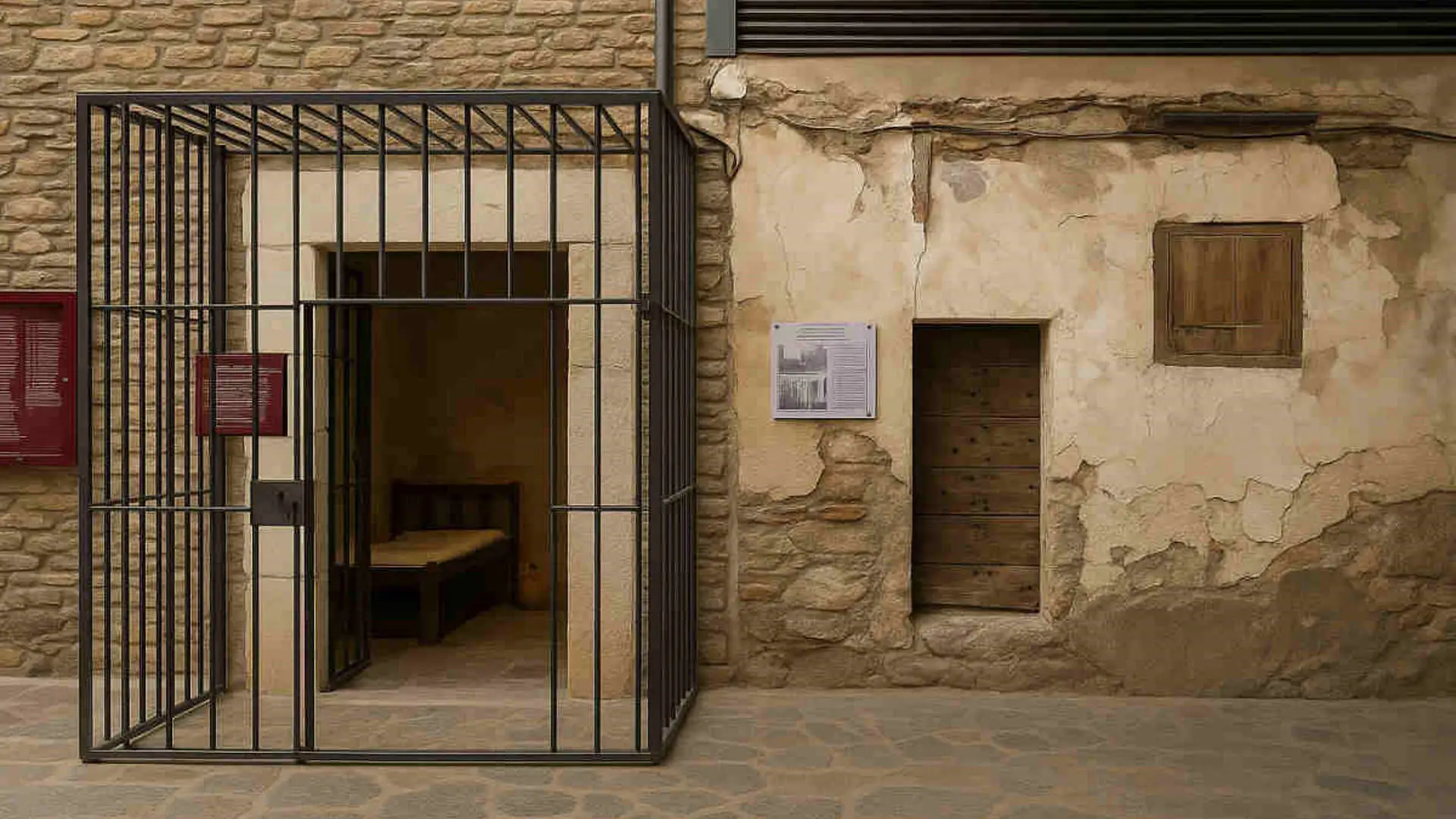
Sort Prison and the WWII Refugee Trail
When crossing the Pyrenees did not always mean immediate freedom.
Sort, in Catalonia’s Pyrenees, became an important detention point for WWII refugees and Allied escapees who crossed from France into Spain. Many had survived dangerous mountain routes only to be arrested after entering Spanish territory without documents.
The former prison in Sort is one of the clearest reminders that escape across the Pyrenees was not always the end of danger. For many fugitives, it was the beginning of another uncertain stage.
Where Is Sort and Why Did It Matter?
Sort is located in Pallars Sobirà, in the Catalan Pyrenees, near the Noguera Pallaresa River. Its position made it significant for people descending from high mountain crossings into Spanish territory.
Some escapees arrived after routes connected with Ariège, Val d’Aran, Andorra, Alt Urgell, or the wider network of Pyrenean crossings. Although Spain was officially neutral, refugees entering without proper papers could still be arrested.
The Prison in Sort
The former prison in Sort was a modest but harsh holding place. It received people who had already endured difficult crossings through snow, forests, mountain passes, and hidden paths.
Those detained included Jewish refugees fleeing Nazi persecution, Allied airmen, resistance-linked escapees, and young French men avoiding forced labor. Some were held for weeks or months while diplomatic channels, consulates, or aid organizations worked toward their release.
Freedom in Sight, Yet Detained
For many refugees, reaching Spain was supposed to mean safety. In reality, arrival could bring interrogation, detention, and uncertainty. The border crossing was only one part of a longer escape journey.
Even so, Spain often became a route toward eventual liberation. Some detainees were later transferred or assisted onward through Barcelona, Andorra, Lisbon, or other channels connected with Allied and humanitarian networks.
Sort and the Chemin de la Liberté
Sort is closely connected with the memory of the Chemin de la Liberté, one of the best-known WWII escape routes across the Pyrenees. The route crossed from the French side of the mountains toward Catalonia, ending in the region around Pallars Sobirà.
This connection gives Sort a special place in the geography of escape. It was not only a destination after the crossing; it was also a place where the meaning of freedom became complicated by arrest, paperwork, and political uncertainty.
For wider context, see the guide to the Chemin de la Liberté WWII freedom trail.
Can You Visit Sort’s WWII History Today?
Yes, but Sort’s WWII history is quiet rather than heavily displayed. The former prison building still exists, though it is no longer used as a prison. Its importance is best understood through historical context rather than through a large museum-style visit.
For travelers interested in WWII escape routes, Sort helps explain what happened after the mountain crossing. It adds a human and administrative dimension to the story: survival, detention, waiting, and eventual release.
Why Sort Still Matters
Sort matters because it shows that WWII escape history did not end at the border. The Pyrenees crossing was physically dangerous, but the legal and political aftermath could also be difficult.
Today, the town offers a quieter form of remembrance. It helps connect the mountain routes with the real lives of refugees, airmen, guides, and families who passed through the region during one of Europe’s darkest periods.
Understanding Sort on the WWII Refugee Trail
Sort prison is one of the most important places for understanding the aftermath of WWII escape routes across the Pyrenees. It reminds us that reaching Spain did not always mean immediate freedom.
For travelers studying this history, Sort adds depth to the story of the Pyrenees: not only the mountain crossing, but also the uncertainty that followed.
For travelers planning to understand this history more deeply, you may also find useful:
Exploring WWII Escape Routes from Barcelona
This private experience follows the history of Pyrenean escape routes through landscape, border geography, and research-based storytelling.
Explore the WWII Escape Route Tour