Montserrat Monastery Facts
Historical, cultural, and practical facts about one of Catalonia’s most important religious sites
Montserrat Monastery is a Benedictine monastery located within the Montserrat mountain range in Catalonia and is one of the most important spiritual destinations in Spain.
The monastery is known for the Black Madonna, the Boys’ Choir, pilgrimage traditions, and its symbolic importance within Catalan culture and history.
Montserrat Means “Saw Mountain”
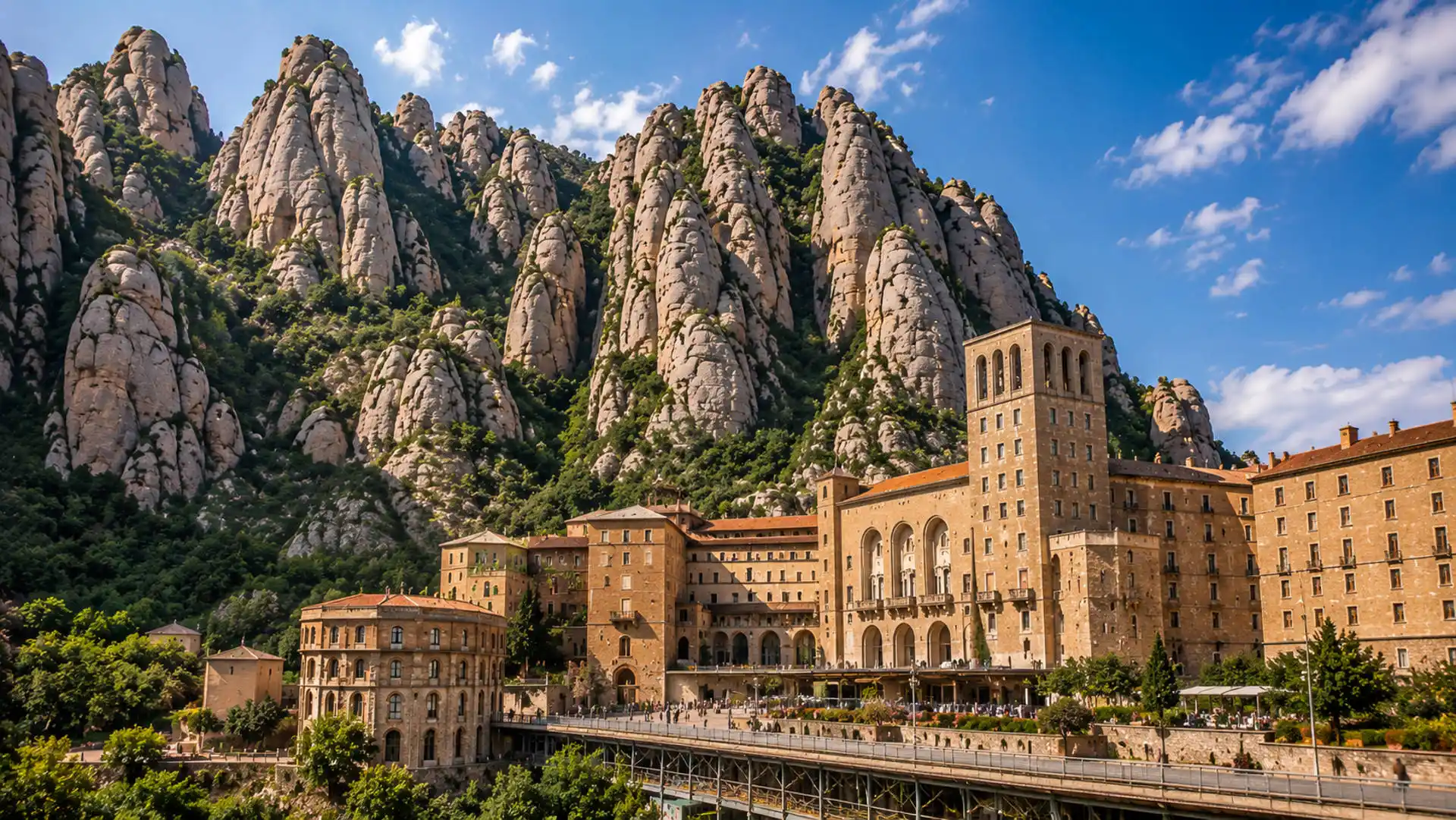
The name “Montserrat” comes from the Catalan words mont (mountain) and serrat (serrated or saw-shaped).
The unusual rock formations surrounding the monastery are among the most recognizable landscapes in Catalonia and help explain why the mountain became associated with spirituality and pilgrimage.
The monastery itself sits approximately 720 meters above sea level within the mountain range.
The Monastery Dates Back to the 11th Century
The Benedictine monastery was officially founded in the 11th century, although hermits and religious communities were already present on the mountain before that period.
Over the centuries, Montserrat developed into one of the most important pilgrimage centers in the Iberian Peninsula.
The monastery also became closely connected to Catalan cultural and intellectual life throughout different historical periods.
For broader historical context, see history of Montserrat Monastery .
The Black Madonna Is the Most Important Religious Symbol
The Black Madonna of Montserrat, known locally as La Moreneta, is one of the most important religious symbols in Catalonia.
Pilgrims have visited the statue for centuries, and devotion to the Black Madonna became central to Montserrat’s spiritual identity.
Today, visitors usually access the statue through a timed entry system inside the basilica complex.
For practical visitor information, see Montserrat Black Madonna, Our Lady of Montserrat .
The Boys’ Choir Is One of Europe’s Oldest
The Escolania de Montserrat is one of the oldest boys’ choirs in Europe, with origins dating back centuries.
The choir continues performing regularly inside the basilica and remains one of the most recognized traditions associated with Montserrat.
For many visitors, hearing the choir inside the monastery becomes one of the most memorable parts of the experience.
For schedules and reservations, see Montserrat Spain Choir: Tickets, Reservations, and Schedules .
Montserrat Remains an Active Monastery
Despite receiving large numbers of visitors every year, Montserrat continues functioning as an active Benedictine monastery.
Monks still live and work within the monastery complex, maintaining religious services, spiritual traditions, and community life on the mountain.
This active religious presence is one of the reasons Montserrat often feels different from purely touristic destinations near Barcelona.
Understanding Montserrat Beyond the Monastery Buildings
Montserrat combines mountain geography, religious traditions, cultural identity, and historical continuity within one of the most distinctive landscapes in Catalonia.
Understanding these historical and cultural elements often gives visitors a deeper appreciation of the monastery and its continuing importance today.
For travelers planning a visit, you may also find useful:
Exploring Montserrat from Barcelona
Visiting Montserrat becomes more meaningful when the monastery’s history, traditions, and mountain setting are understood together.
Structured private tours help travelers experience Montserrat with historical context and carefully organized pacing throughout the day.
Explore the Montserrat Tour