
The Comet Line: WWII Escape Route Across the Pyrenees
How one of Europe’s most effective resistance networks helped Allied airmen escape occupied Europe through the mountains between France and Spain.
Among the many escape networks operating during World War II, few became as successful as the Comet Line.
Created in occupied Belgium and later expanded through France and the Pyrenees, the network helped hundreds of Allied airmen avoid capture and return to Britain. Its success depended on an extraordinary combination of organization, secrecy, local knowledge, and personal courage.
Today, the Comet Line remains one of the best-known examples of civilian resistance during the war.
What Was the Comet Line?
The Comet Line was a resistance network established in 1941 to help Allied servicemen escape German-occupied Europe.
Its primary mission was to recover Allied airmen whose aircraft had been shot down and guide them through a series of safe houses toward neutral Spain.
Once in Spain, escapees could continue to Gibraltar and eventually return to Britain.
The network operated across several countries, connecting Belgium, France, the Pyrenees, Spain, and Gibraltar.
How Did the Escape Route Work?
The journey often began immediately after an aircraft crash.
Local resistance members would hide the airman, provide civilian clothing, false documents, and arrange movement through a chain of trusted contacts.
The final stage was usually the most difficult.
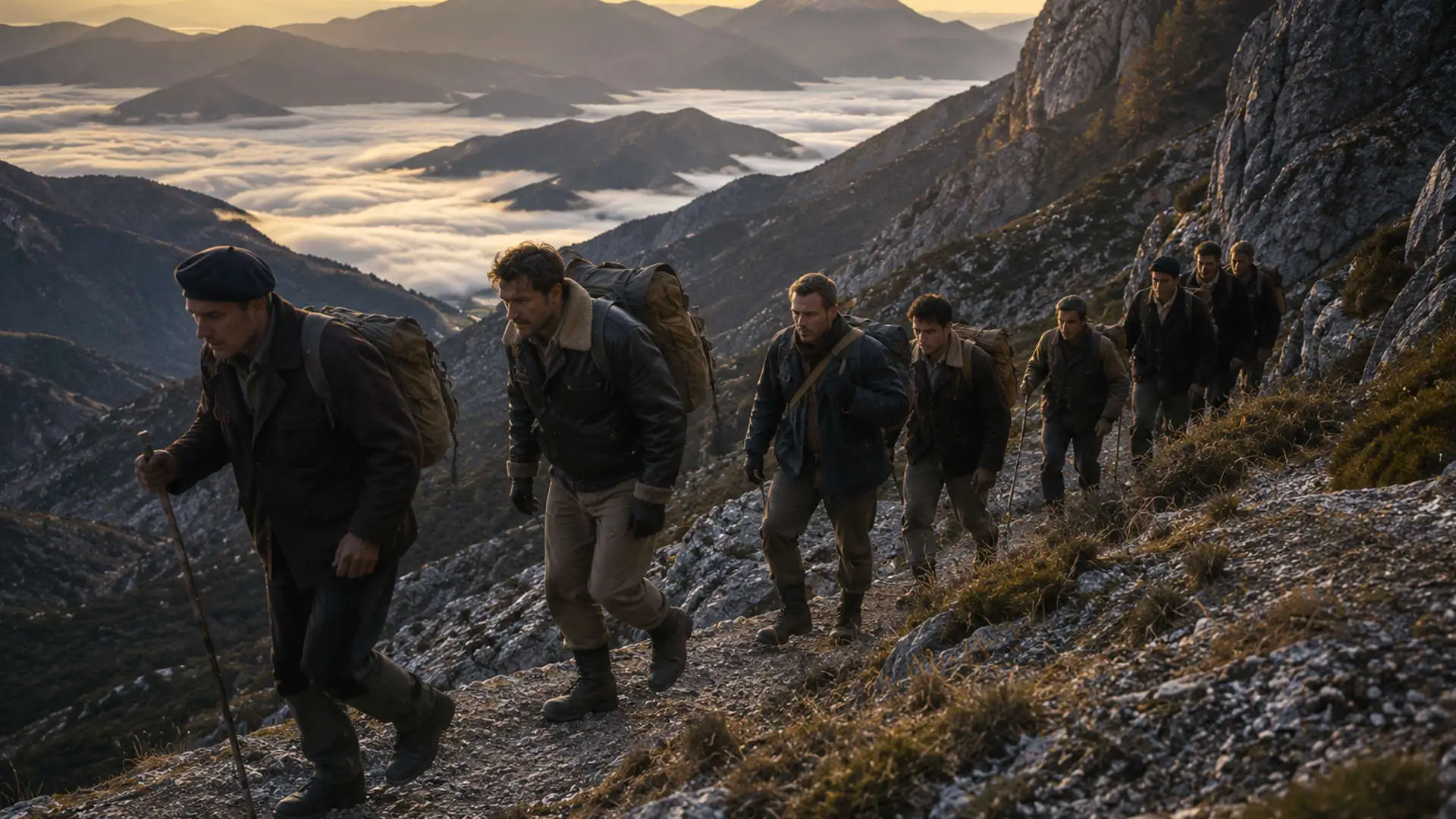
To reach Spain, escapees had to cross the Pyrenees on foot, often traveling at night through remote mountain terrain accompanied by local guides.
Every stage required strict secrecy because discovery could endanger both the escapee and the people helping them.
Crossing the Pyrenees
The Pyrenees represented both the final obstacle and the gateway to freedom.
Most Comet Line crossings took place through the western and central sections of the mountain range, particularly in areas linking southern France with northern Spain.
The exact routes varied depending on weather conditions, military activity, and security risks.
Crossings could take several days and often involved steep terrain, exhaustion, and unpredictable mountain conditions.
For many Allied airmen, the Pyrenean crossing became the most memorable part of the entire escape.
Who Organized the Comet Line?
The network depended on hundreds of individuals working in secret.
Among its most famous figures was Andrée de Jongh, a young Belgian resistance member who played a central role in developing the escape system.
Alongside her were countless local guides, safe-house operators, couriers, doctors, railway workers, and ordinary citizens.
Many were arrested, imprisoned, or killed because of their involvement.
Their contribution remains one of the most remarkable examples of civilian resistance during World War II.
How Successful Was the Comet Line?
Historians estimate that the Comet Line helped approximately 700 Allied airmen successfully escape.
This made it one of the most effective escape networks operating in occupied Europe.
Its success depended not on military strength but on trust, coordination, and local knowledge.
Even under intense pressure from German intelligence services, the network continued operating until the final stages of the war.
Can You Follow Comet Line Routes Today?
Parts of the landscapes associated with the Comet Line can still be visited today.
Some routes are commemorated through memorials, museums, and historical markers. Others remain part of the broader network of Pyrenean escape-route heritage.
Although modern visitors can explore these areas, the historical importance of the Comet Line lies not only in the geography but also in the people who risked their lives to help others escape.
Understanding that human story is essential to understanding the route itself.
Why the Comet Line Still Matters
The Comet Line demonstrates how ordinary individuals created extraordinary opportunities for survival during one of Europe’s darkest periods.
The network connected cities, villages, safe houses, and mountain crossings into a system that helped hundreds regain their freedom.
Today, its legacy survives through the stories of the airmen who escaped, the resistance members who assisted them, and the mountain routes that formed the final path toward safety.
Exploring WWII Escape Routes from Barcelona
The landscapes that formed part of Europe’s wartime escape networks can still be explored today. Historical sites, mountain valleys, and border regions provide important context for understanding these remarkable stories.
Explore the WWII Escape Route Tour