
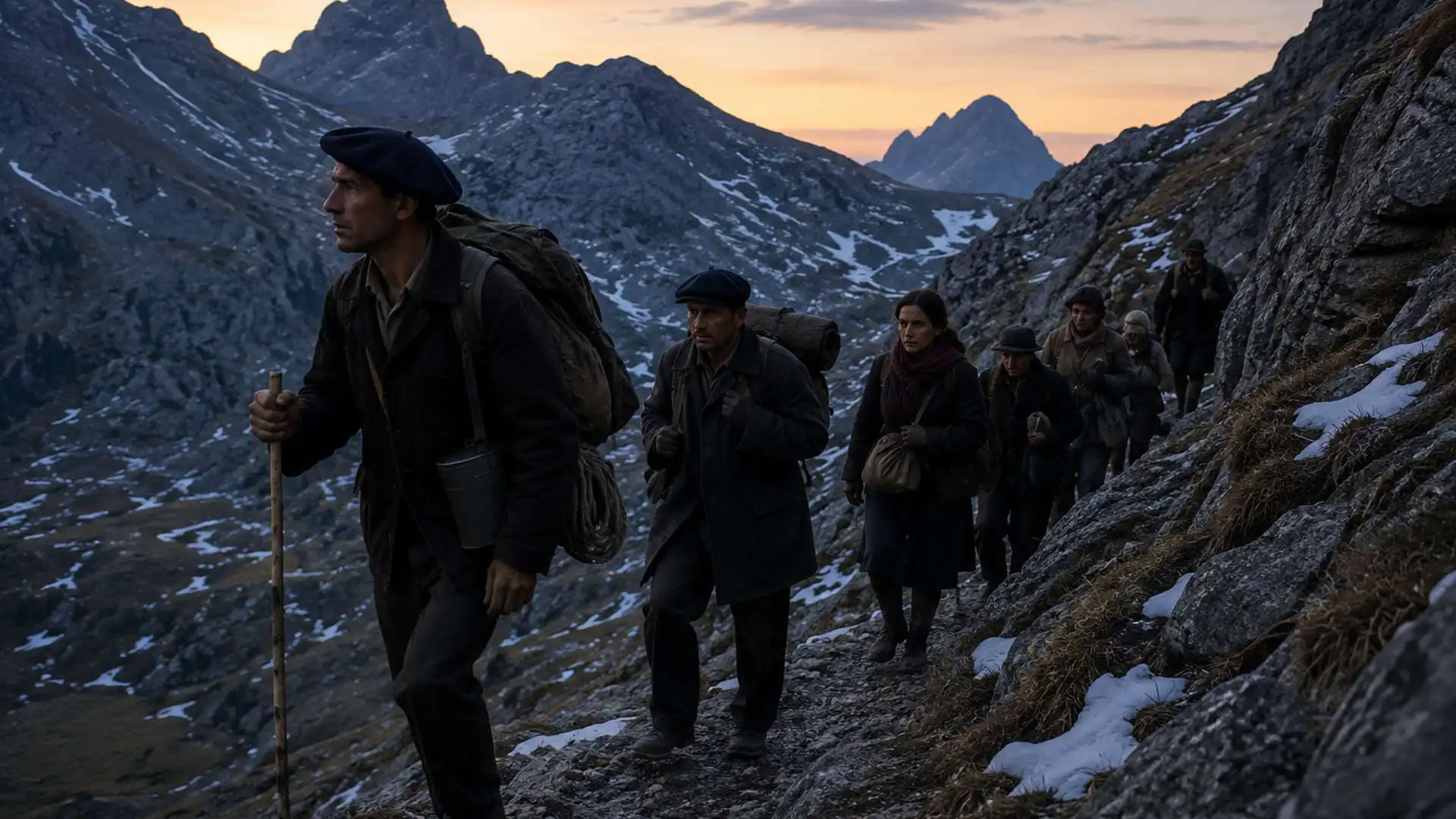
Passeurs of the Pyrenees: WWII Guides to Freedom
The local men and women who guided refugees, Allied airmen, and resistance members across the mountains between occupied France and neutral Spain.
During World War II, thousands of people crossed the Pyrenees seeking safety beyond Nazi-controlled Europe.
Most could not have completed the journey alone.
They depended on local guides known as passeurs—individuals who knew hidden trails, weather conditions, border patrol patterns, and safe places to rest. Their role was often decisive in determining whether an escape succeeded or failed.
What Was a Passeur?
The French word passeur literally means “one who helps others pass.”
During the war, passeurs guided refugees, Allied airmen, resistance couriers, and political fugitives across the mountains separating France and Spain.
Some worked within organized escape networks. Others acted independently, relying on local knowledge accumulated through generations of living in the Pyrenees.
In many cases, the guide’s knowledge of a single valley or mountain pass could save lives.
Who Became Passeurs?
There was no typical profile.
Passeurs came from many backgrounds:
- Shepherds familiar with remote mountain routes
- Smugglers already accustomed to crossing borders
- Farmers and villagers living near frontier areas
- Resistance members supporting escape networks
- Local residents motivated by humanitarian reasons
Some guided only a handful of people. Others helped hundreds throughout the war.
The Risks They Faced
Helping fugitives was extremely dangerous.
German authorities, French collaborators, and border patrols actively searched for escape networks.
If caught, passeurs could face imprisonment, deportation, torture, or execution.
The mountains themselves also posed serious risks. Snowstorms, fog, avalanches, and difficult terrain made every crossing unpredictable.
For many guides, every journey involved both physical danger and personal sacrifice.
Passeurs and the Major Escape Networks
Many of the best-known WWII escape routes depended on local guides.
Passeurs played important roles in:
- The Comet Line evacuation network
- The Pat O’Leary Line
- The routes later known as Chemin de la Liberté
- Crossings through Andorra and Alt Urgell
- Routes connecting Ariège, Pallars Sobirà, and Catalonia
Although these networks differed in organization, all relied on local knowledge and trusted guides capable of navigating the mountains safely.
Why the Passeurs Matter Today
The history of WWII escape routes is often told through the experiences of refugees, resistance fighters, or Allied airmen.
Yet many crossings would never have happened without the guides who led them.
The passeurs rarely sought recognition. Most operated quietly and left behind few written records.
Today, their contribution forms an essential part of the history of resistance, solidarity, and human courage in the Pyrenees.
Can You Still Follow the Paths Used by Passeurs?
Many routes once used by passeurs can still be explored today.
Some are now marked hiking trails. Others remain little-known mountain paths that require local knowledge to understand their historical context.
Walking these landscapes helps visitors appreciate the physical challenges faced by both the refugees and the guides who accompanied them.
The mountains remain largely unchanged, even if the circumstances surrounding their crossings have long passed.
Understanding the Human Side of the Escape Routes
The story of the WWII escape routes is ultimately a story about people.
While maps, borders, and mountain passes are important, the journeys depended on individuals willing to help strangers at considerable personal risk.
The passeurs represent one of the most important—and often overlooked—parts of the Pyrenean escape story.
Exploring WWII Escape Routes from Barcelona
Many of the valleys, villages, and border regions connected to these stories can still be explored today. Understanding the role of the passeurs adds a human dimension to the landscapes of the Pyrenees.
Explore the WWII Escape Route Tour