
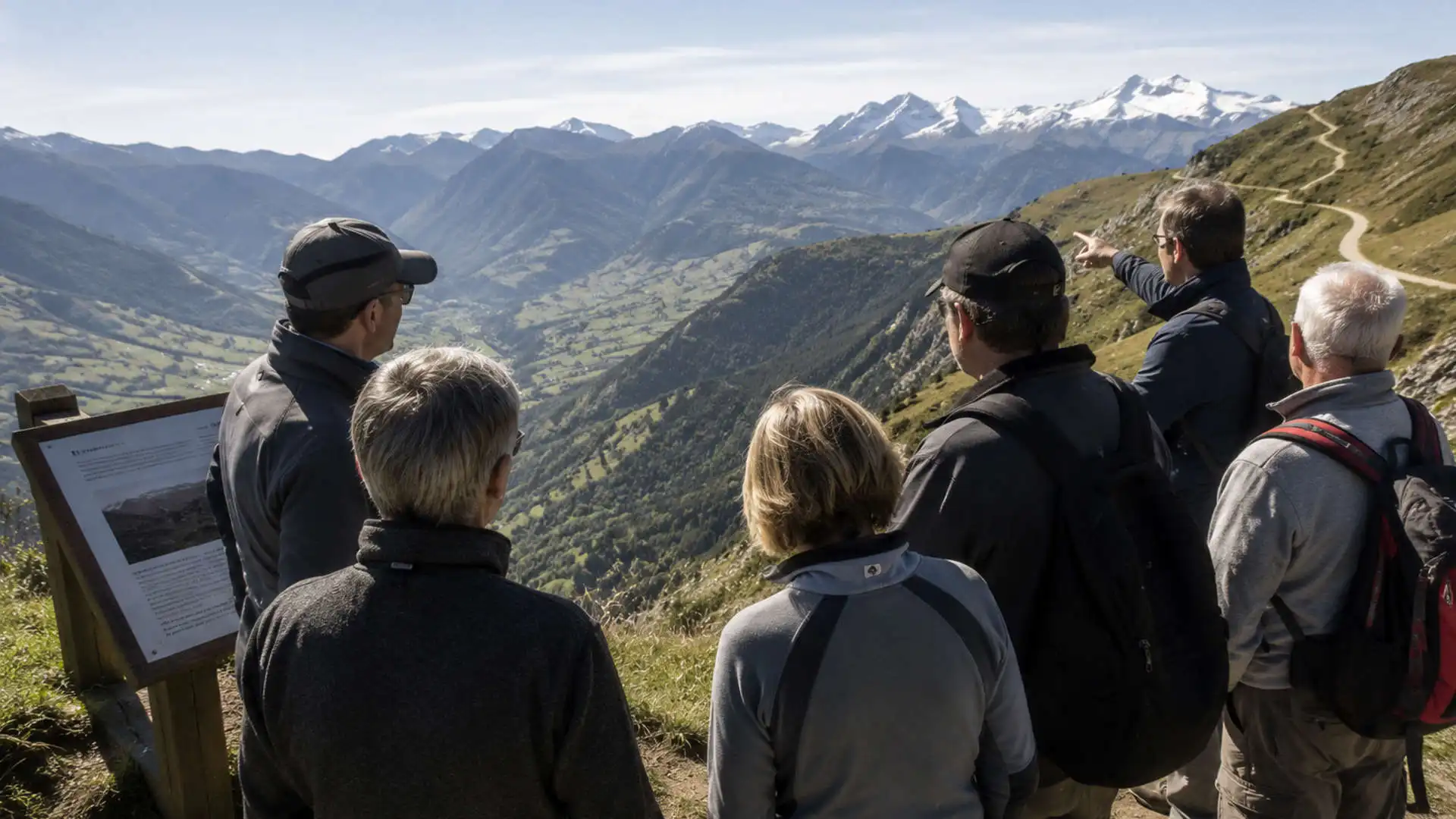
Can You Visit WWII Escape Routes Without Hiking?
Understanding the history of the Pyrenean escape networks without completing a multi-day mountain crossing.
Yes. Many travelers can gain a meaningful understanding of WWII escape routes without hiking the original trails.
While some famous freedom routes are now multi-day trekking experiences, much of the historical story can be explored through border regions, mountain valleys, towns, viewpoints, and locations connected to the escape networks.
For many visitors, understanding how the routes operated is more important than physically recreating the crossing.
Why People Assume Hiking Is Necessary
Many of the most famous WWII escape routes are now promoted as hiking trails.
Examples include the Chemin de la Liberté and other commemorative routes that follow original mountain crossings.
Because of this, travelers often assume that hiking is the only way to experience the history.
In reality, the story extends far beyond the trails themselves.
The History Is Larger Than the Trail
The escape routes were not simply mountain paths.
They were complete networks involving:
- Safe houses
- Border villages
- Resistance contacts
- Passeurs and local guides
- Andorra and frontier communities
- Prisons and detention centers
- Mountain crossings
Many of these places can be visited without undertaking a demanding hike.
Understanding how they connected often provides a broader perspective on the escape system.
Why Some Historical Routes Are Difficult to Access
Many original crossing routes pass through high mountain terrain.
Depending on the season, snow, weather conditions, and trail conditions can make access difficult.
Some areas remain remote even during summer.
This is one reason why many traditional freedom-trail experiences are seasonal and physically demanding.
Visitors interested primarily in the history may find that a broader interpretive approach provides greater flexibility..
What Can Be Seen Without Hiking?
A great deal.
Travelers can still explore:
- Former border regions
- Key mountain valleys
- Towns linked with escape networks
- Important crossing areas
- Locations connected with guides and passeurs
- Sites associated with refugees and Allied airmen
- Areas connected with Andorra’s wartime history
These locations help explain how escape routes functioned within the wider geography of the Pyrenees.
Understanding the Landscape Instead of Recreating the Crossing
There are two different ways to approach WWII escape-route history.
One approach focuses on physically completing a trail.
The other focuses on understanding the landscape in which the events occurred.
Neither approach is inherently better.
However, travelers whose primary interest is historical understanding often find that viewing multiple locations across the region provides a broader understanding than following a single trail for several days.
Is This Suitable for Non-Hikers?
In many cases, yes.
Visitors who enjoy history, geography, border regions, and research-based storytelling can often gain a deep understanding of the subject without significant physical demands.
Short walks, viewpoints, and selected stops may still be included depending on conditions and interest levels, but the emphasis remains on learning rather than endurance.
This makes the history accessible to a wider range of travelers.
Understanding WWII Escape Routes from Barcelona
For travelers based in Barcelona, a day trip can provide access to important parts of the Pyrenean escape-route landscape.
Rather than focusing on a single crossing, visitors can explore multiple locations connected with the wider history of fugitives, resistance networks, guides, and border communities.
The goal is not to replicate a wartime journey but to understand how it worked.
Exploring the History Without the Trek
The WWII escape routes of the Pyrenees can be appreciated in different ways.
Some travelers choose to follow the trails themselves. Others prefer to explore the wider landscape, historical context, and human stories behind the crossings.
Both approaches offer valuable perspectives.
For visitors whose primary interest is understanding the history, visiting key locations throughout the region can provide a rich and rewarding experience without requiring a multi-day mountain trek.
Exploring WWII Escape Routes from Barcelona
This private experience focuses on the landscapes, routes, and stories of the Pyrenean escape networks through research-based interpretation rather than multi-day hiking.
Explore the WWII Escape Route Tour