
The Nightingale WWII Escape Route and the Pyrenees
The fictional story, the real mountain crossings, and the history behind escape routes into Spain.
The Nightingale escape route is not the name of a documented WWII network. It comes from Kristin Hannah’s novel The Nightingale, where Isabelle Rossignol helps downed Allied airmen cross the Pyrenees into neutral Spain.
Although the character and route are fictionalized, the story is based on real wartime escape routes used by Allied airmen, Jewish refugees, resistance couriers, and local guides during WWII.
Was There Really a Nightingale Network?
No — “The Nightingale” was not the official name of a known WWII escape network in the Pyrenees. The name is connected to the novel, where the central character uses the codename “Nightingale.”
However, the historical background is real. During WWII, escape networks across southern France helped people cross the Pyrenees into Spain. These crossings required secrecy, local knowledge, and great personal risk.
What Real History Inspired the Story?
The novel reflects a real pattern of wartime escape. Downed Allied pilots, Jewish refugees, resistance members, and couriers were guided through mountain routes from occupied or Vichy France toward neutral Spain.
These journeys were usually made at night and often involved remote paths, shepherd trails, border villages, safe houses, and guides who knew how to avoid patrols. The Pyrenees were not only scenery; they were the final barrier between danger and possible safety.
Where Did Real Pyrenees Escape Routes Cross?
Real WWII escape routes crossed different parts of the Pyrenees, including areas linked with the Ariège, Saint-Girons, the Val d’Aran, Pallars Sobirà, Alt Urgell, Andorra, and Catalonia.
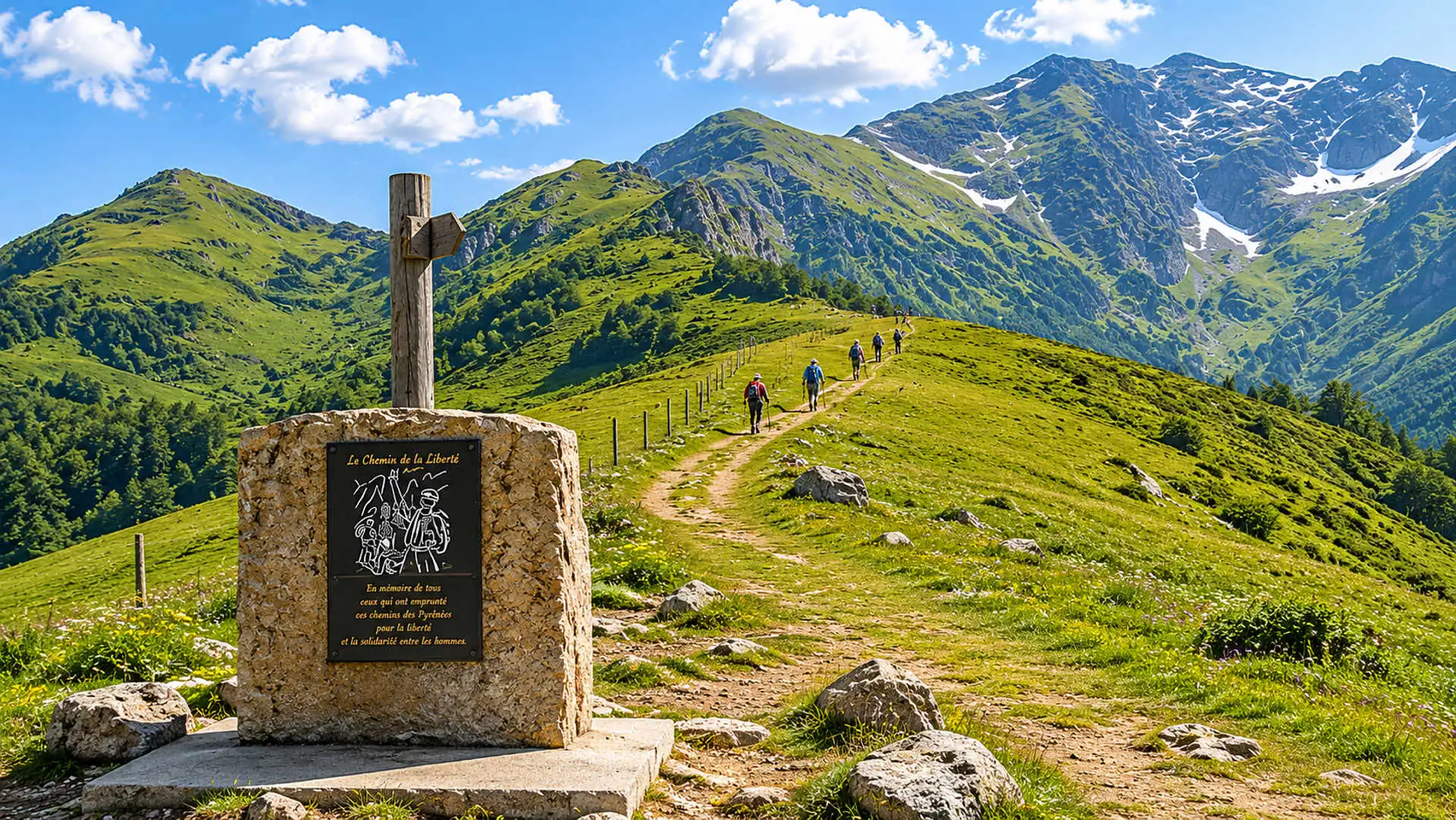
Some routes are associated with better-known names such as the Chemin de la Liberté, while others were smaller, changing, and less formally recorded. Their exact paths could shift depending on weather, patrols, informants, and the guide’s local knowledge.
For a broader geographical overview, see the guide to WWII escape route maps across the Pyrenees.
Who Used These Escape Routes?
The real Pyrenean escape routes were used by different groups whose lives depended on reaching neutral territory. These included Allied airmen shot down over France, Jewish refugees fleeing persecution, resistance couriers, and people escaping forced labor or arrest.
Local guides played a decisive role. Some were shepherds, smugglers, resistance contacts, or mountain people who understood the terrain. Their knowledge of weather, hidden paths, and border movement often determined whether a crossing succeeded.
For the refugee side of this history, see the article on Jewish refugees escaping over the Pyrenees during WWII.
Can You Follow a “Nightingale” Route Today?
Because the Nightingale route is fictional, there is no single official trail to follow under that name. What travelers can explore today are the real Pyrenean landscapes and escape corridors that inspired stories like it.
Some historical routes can be walked in sections, while others are better understood through selected sites, mountain passes, border towns, memorial points, and documented local history. The most meaningful approach is not to search for one exact fictional path, but to understand the real escape system behind the story.
Why the Story Still Matters
The Nightingale helped many readers discover the hidden history of escape across the Pyrenees. Its fictional structure gives emotional form to a real historical truth: many people survived because others accepted enormous risks to guide them across the mountains.
The real history is quieter, more fragmented, and often less dramatic than fiction — but it is also more powerful. It belongs to border villages, hidden guides, refugee families, imprisoned escapees, and mountain routes where survival was never guaranteed.
Understanding The Nightingale and the Real Pyrenees Routes
The Nightingale route should be understood as a fictional doorway into a real history. The novel’s escape story was inspired by genuine WWII crossings over the Pyrenees, but the documented history is broader, more complex, and deeply rooted in the landscape between France, Andorra, and Spain.
For travelers interested in this subject, the value lies in connecting the story to real places: mountain passes, border towns, safe houses, prisons, and the hidden networks that helped people escape Nazi Europe.
For travelers planning to understand this history more deeply, you may also find useful:
Exploring WWII Escape Routes from Barcelona
For travelers who want to understand the real history behind Pyrenean escape routes, this private experience focuses on landscape, border history, and research-based storytelling.
Explore the WWII Escape Route Tour