
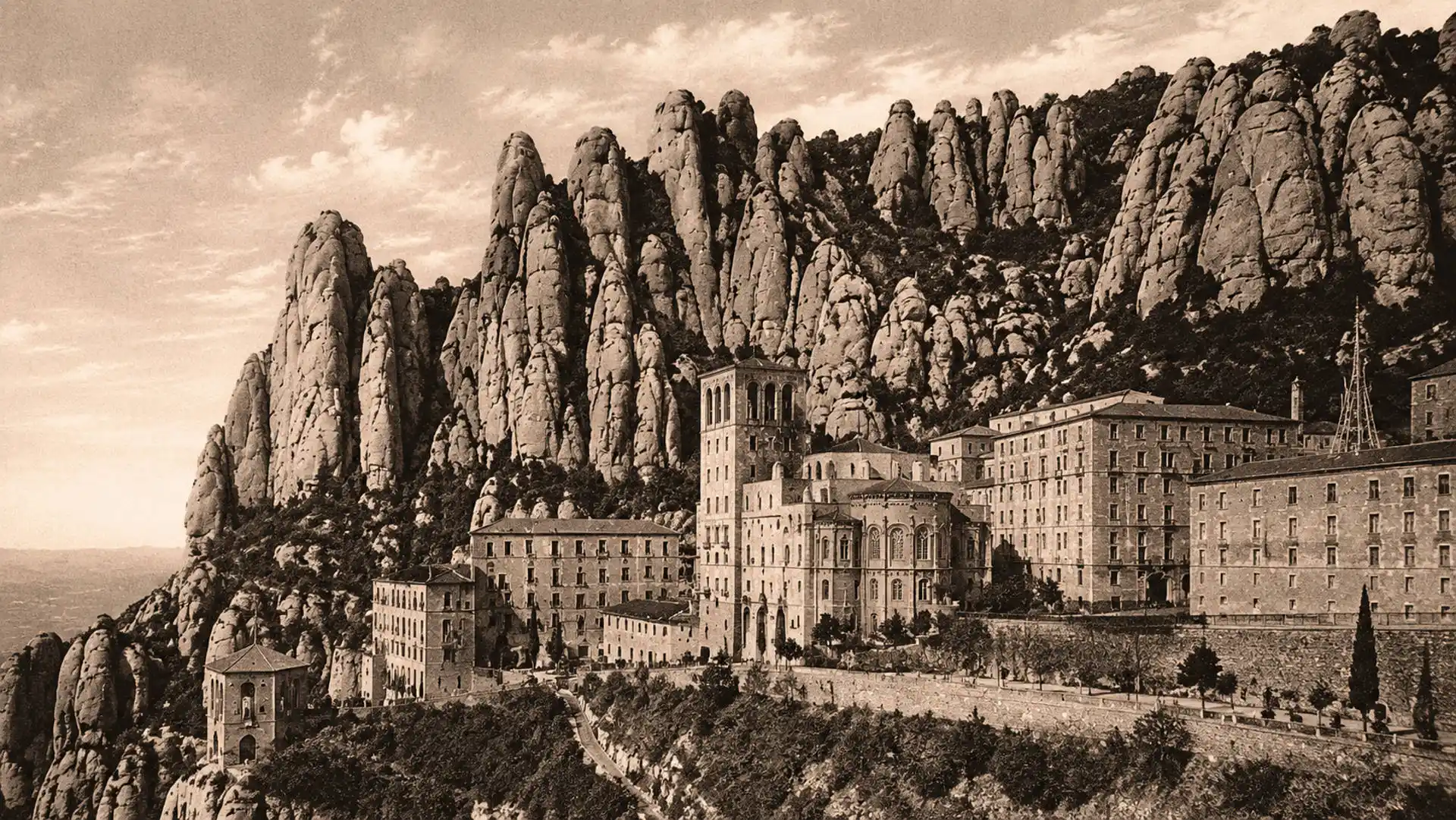
History of Montserrat Monastery
Understanding the origins, spiritual traditions, and historical importance of Montserrat in Catalonia
Montserrat Monastery is a Benedictine monastery founded in the mountains of Catalonia and has served for centuries as one of the region’s most important spiritual and cultural centers.
The monastery became closely connected to Catalan identity through pilgrimage traditions, the Black Madonna, religious history, and its symbolic role within Catalonia itself.
When Was Montserrat Monastery Founded?
The origins of religious life at Montserrat date back many centuries, although the Benedictine monastery itself was officially founded in the 11th century.
The mountain had already attracted hermits and pilgrims because of its unusual landscape and spiritual isolation long before the monastery became formally established.
Over time, Montserrat evolved from a small religious community into one of the most important pilgrimage destinations in the Iberian Peninsula.
The Black Madonna and Pilgrimage Tradition
Much of Montserrat’s religious importance is connected to the Black Madonna, known locally as La Moreneta.
According to tradition, the statue was discovered on the mountain centuries ago and gradually became associated with pilgrimage, devotion, and Catalan spiritual identity.
Pilgrims from across Spain and Europe traveled to Montserrat for religious reasons, helping transform the monastery into an important spiritual center over the centuries.
For a detailed guide, see Montserrat Black Madonna, Our Lady of Montserrat .
Montserrat and Catalan Identity
Beyond religion, Montserrat became deeply connected to the cultural identity of Catalonia itself.
During different historical periods, the monastery represented continuity of Catalan language, traditions, and intellectual life.
The Escolania de Montserrat, one of Europe’s oldest boys’ choirs, also became an important symbol of Catalan musical and cultural heritage.
Even today, many Catalans view Montserrat as both a spiritual destination and a cultural symbol of the region.
Destruction and Reconstruction
Montserrat suffered severe destruction during the Napoleonic Wars in the early 19th century, when large parts of the monastery complex were damaged or destroyed.
During later periods of political instability in Spain, the monastery again faced challenges, including violence during the Spanish Civil War.
Much of the present monastery complex reflects reconstruction and restoration efforts carried out over the last two centuries.
Despite these periods of destruction, Montserrat maintained its religious and symbolic importance throughout Catalan history.
Montserrat Monastery Today
Today, Montserrat continues functioning as an active Benedictine monastery while also welcoming visitors, pilgrims, and travelers from around the world.
The monastery combines religious life, historical heritage, sacred art, and mountain landscape within one of the most distinctive settings in Catalonia.
For many visitors, understanding the historical background of Montserrat changes the experience from simple sightseeing into a deeper cultural and spiritual visit.
Understanding the Historical Importance of Montserrat
Montserrat Monastery is not only a religious site, but also a place deeply connected to Catalan identity, pilgrimage traditions, and centuries of historical continuity.
Understanding this historical background often helps visitors experience the monastery and mountain with greater context and appreciation.
For travelers planning a visit, you may also find useful:
Exploring Montserrat from Barcelona
Visiting Montserrat becomes more meaningful when the monastery’s spiritual traditions, historical background, and mountain setting are experienced together.
Structured private tours help travelers explore Montserrat with historical context and carefully organized pacing throughout the day.
Explore the Montserrat Tour