
Understanding Andorra’s Culture and History
A closer look at the traditions, heritage, and identity of a Pyrenean country
Andorra is often seen simply as a mountain destination between Spain and France, but its cultural and historical identity is far more complex. Shaped by geography, political independence, and centuries of isolation in the Pyrenees, the country has developed a unique character that is not immediately visible to casual visitors.
Understanding Andorra requires looking beyond surface impressions — into its Romanesque heritage, local traditions, and distinctive political history.
For many first-time visitors researching whether Andorra is worth visiting, understanding this deeper cultural context often changes how the country is perceived.
Romanesque Heritage in the Pyrenees
One of the most defining elements of Andorra’s historical identity is its Romanesque architecture. Scattered across valleys and mountain slopes, small stone churches dating from the 9th to 12th centuries reflect the country’s medieval past.
These structures are not monumental in scale, but they are significant in continuity — preserved as part of the landscape rather than isolated monuments.
Examples include Sant Joan de Caselles and Sant Esteve in Andorra la Vella, both illustrating how architecture, religion, and geography are closely connected.
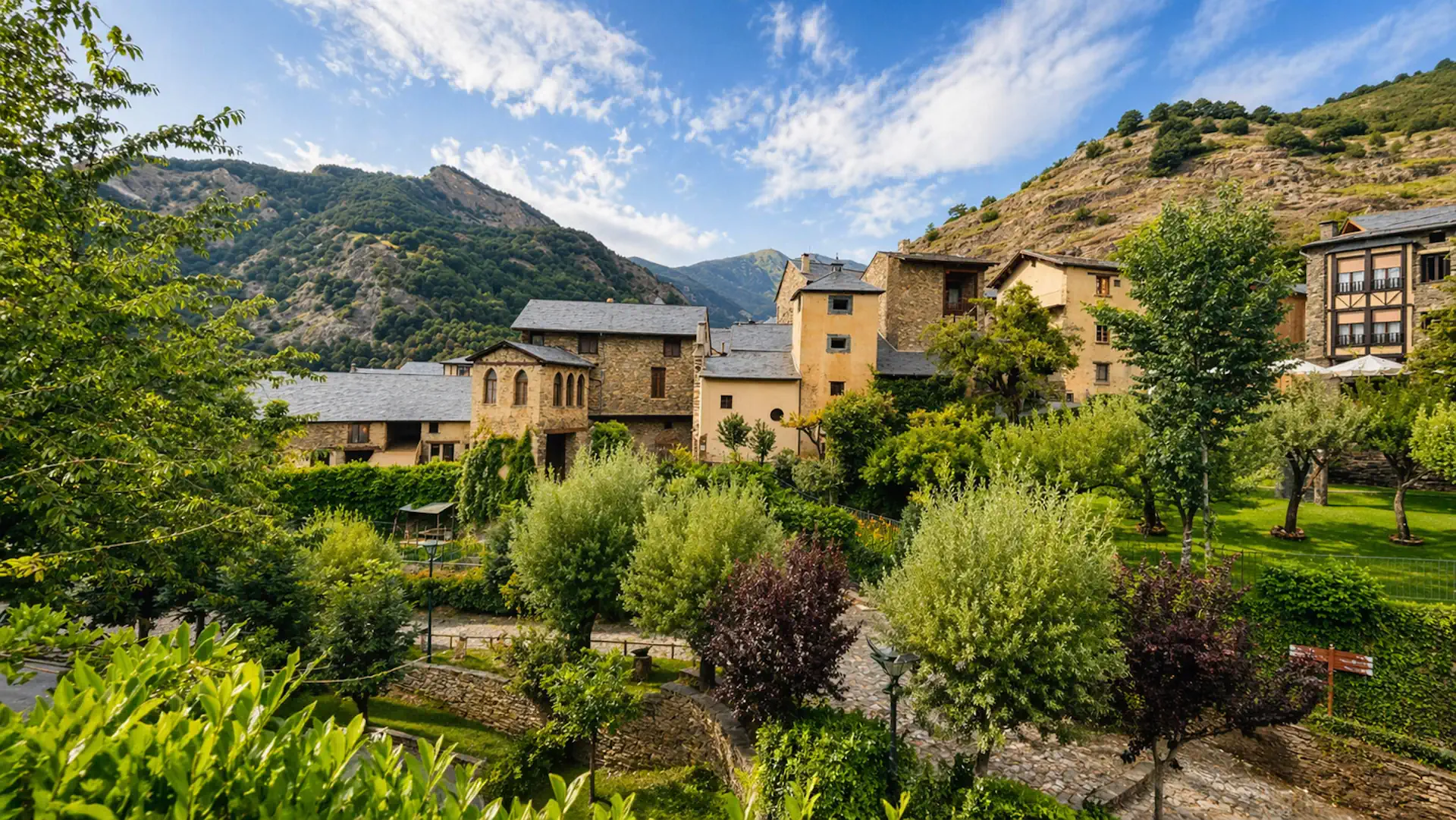
Many of these churches are still located in small villages that remain largely unchanged over time.
These historical landscapes are often experienced alongside scenic mountain routes and viewpoints throughout the Pyrenees.
Traditions and Cultural Identity
Andorra’s culture reflects a blend of Catalan roots and cross-border influences. Local festivals, seasonal events, and traditional cuisine remain important expressions of identity.
Celebrations such as village festivals and seasonal gatherings continue to play a role in maintaining continuity with the past, rather than being purely touristic events.
A Unique Political System
Andorra is one of the oldest parliamentary systems in Europe, historically governed as a co-principality under the joint authority of the Bishop of Urgell and the French head of state.
This structure, combined with geographical isolation, has contributed to the country’s long-standing independence and distinct identity.
Museums and Cultural Sites
Several sites help interpret Andorra’s past, including:
- Casa de la Vall: historic parliament building
- Casa Plandolit: example of 19th-century Andorran life
Experiencing Andorra’s Culture Today
While these elements can be understood individually, they are best experienced within the context of the landscape and geography of the Pyrenees.
For travelers coming from Barcelona on a day trip to Andorra, cultural sites are typically experienced as part of a structured route through the country.
This becomes particularly relevant for travelers researching whether one day is enough for Andorra, since much of the experience depends on how the route is structured.
Understanding Andorra Before You Visit
Many travelers planning a visit to Andorra also explore practical topics related to mountain travel, local identity, seasonal conditions, and what can realistically be experienced in one day.
For travelers planning a visit, you may also find useful:
Exploring Andorra from Barcelona
Understanding Andorra’s culture and history requires more than isolated visits — it depends on how the country is approached and experienced.
A private day trip from Barcelona allows you to explore these elements through a structured journey across the Pyrenees.
Explore the Andorra Day Trip